
Does Using a Pool Cover Affect How Often You Need Tile Cleaning?
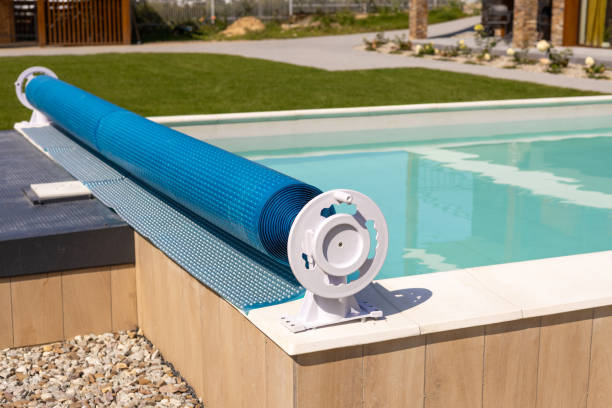
Pool covers are often associated with reduced evaporation and debris, and it's a reasonable question whether that translates into less frequent tile cleaning needs as well. The relationship is real, but it's more nuanced than a simple "cover equals less buildup" assumption.
How Covers Can Reduce Some Contributing Factors
Reduced evaporation. Since calcium buildup at the waterline is directly tied to repeated evaporation cycles depositing minerals, a cover that significantly reduces evaporation can, in theory, slow the rate at which new buildup accumulates along the waterline.
Less debris entering the water. A cover reduces leaves, dust, and other debris settling into the pool, which can indirectly support more stable water chemistry by reducing the organic load that chlorine and other chemicals have to manage.
Why This Doesn't Eliminate the Need for Tile Cleaning
Chemical balance still matters regardless of cover use. Even with reduced evaporation, calcium hardness in the water itself, largely determined by fill water and ongoing chemical management, still contributes to buildup potential. A cover slows one contributing factor but doesn't address the underlying water chemistry driving calcium deposition.
Covers don't eliminate evaporation entirely. Even a well-fitted cover reduces but doesn't fully stop evaporation, meaning some degree of waterline mineral deposit still occurs over time, just potentially at a somewhat slower rate than an uncovered pool.
Covered pools can still develop other tile issues. Algae or organic staining, for instance, isn't directly tied to evaporation and can still develop on tile surfaces regardless of cover use, particularly if chemical balance isn't consistently maintained underneath the cover.
Why Cover Use Might Modestly Extend Cleaning Intervals
For pools that use a cover consistently and also maintain solid chemical balance, it's reasonable that tile cleaning intervals might extend somewhat compared to an identical pool without a cover, though this isn't a dramatic or guaranteed difference, and shouldn't be assumed as a reason to skip periodic inspection of tile condition altogether.
Why Visual Inspection Still Matters More Than Assumptions
Rather than assuming cover use means tile cleaning can be pushed back on a fixed extended schedule, periodically checking actual tile condition, regardless of cover use, remains the most reliable way to know when professional cleaning is genuinely needed.
The Bigger Factor: Consistent Chemical Balancing
Whether or not a cover is used, keeping calcium hardness and pH properly managed through consistent chemical balancing has a more direct and significant impact on how quickly tile buildup develops than cover use alone. A covered pool with poorly managed chemistry can still develop meaningful buildup, while an uncovered pool with excellent chemical management may fare comparably well.

Using a cover but not sure how it's actually affecting your tile? Request your free consultation and get an honest assessment.