
Pool Equipment Repair: Common Problems and What They Mean
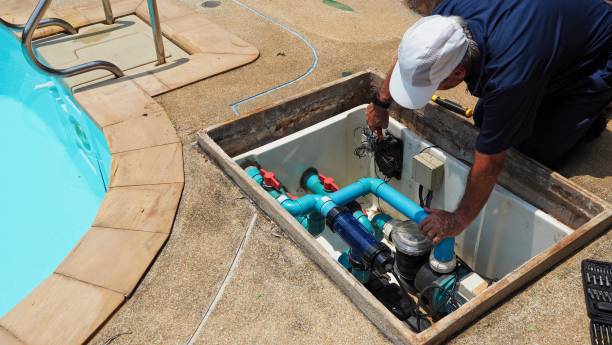
A strange noise from the pump. A heater that won't kick on. Lights that flicker and then stay dark. Pool equipment problems rarely show up as one big failure, they usually start small, and by the time homeowners search for pool equipment repair near me, something has already gone from "a little off" to "not working at all."
The Most Common Pool Equipment Problems
Pump issues. Grinding, humming without water movement, or a pump that won't turn on at all usually points to a failing motor, a clogged impeller, or a bad capacitor. Ignoring pump noise almost always leads to a full motor replacement instead of a simpler repair.
Filter problems. Reduced water clarity, high filter pressure readings, or water bypassing the filter entirely can mean a cracked filter tank, worn cartridge, or a valve that isn't seating correctly.
Heater malfunctions. A heater that won't ignite, trips repeatedly, or heats inconsistently often comes down to a faulty igniter, thermostat, or gas valve issue that needs a trained technician to diagnose safely.
Automation and valve issues. Systems that won't respond to commands, valves stuck in one position, or actuators that have failed are common in pools with automated controls, and they're rarely a DIY fix.
Light failures. Pool lights that flicker, won't turn on, or trip a breaker usually point to a failed bulb, damaged gasket, or wiring issue, and pool electrical work should never be handled without proper training.
Why Fast Pool Equipment Repair Matters
Pool equipment doesn't fail in isolation. A struggling pump means poor circulation, which means chemicals don't distribute evenly, which means algae and cloudy water follow shortly after. A failing filter lets debris and contaminants back into the pool instead of catching them. One equipment issue tends to cause a chain reaction if it's left unaddressed.
That's why diagnosing the actual cause matters more than just swapping a part. A proper pool equipment repair visit involves testing performance, checking pressure and flow, and confirming the fix addresses the root problem instead of masking a symptom.
Signs You Need Pool Equipment Repair Now, Not Later
- Unusual noises coming from the pump area
- Water that isn't circulating or looks stagnant in certain spots
- Rising energy bills tied to equipment running less efficiently
- Error codes or warning lights on automation systems
- Reduced water pressure through jets or returns
Waiting on any of these almost always turns a smaller repair into a full replacement. Pumps that run hot for weeks, for example, tend to burn out completely instead of being fixable with a part swap.
What Homeowners in North Texas Should Expect
For homeowners across Westlake, Southlake, Argyle, Northlake, and Flower Mound, pool equipment issues tend to spike during peak summer months when systems are running longest and hardest. A pump or heater that's marginal in spring often fails outright by July. Getting equipment checked at the first sign of trouble, rather than after a full breakdown, is almost always the more affordable path.
Honest pool equipment repair means getting a clear answer about what's actually wrong, what it costs to fix, and whether a repair or replacement makes more sense for your specific system, without pressure toward the more expensive option when it isn't necessary.
The Value of Catching It Early
Pool equipment is a long-term investment, and small repairs done early protect that investment far better than emergency replacements done under pressure. A pump that gets serviced at the first grinding noise is a repair. A pump that runs until it seizes is a replacement. That's the gap proper pool equipment repair is designed to close.

Something not sounding or working right? Request your free consultation and get a clear diagnosis from Pool Theory before a small issue becomes an expensive one.