
Pool Tile Cleaning: How to Get Rid of Calcium Buildup for Good
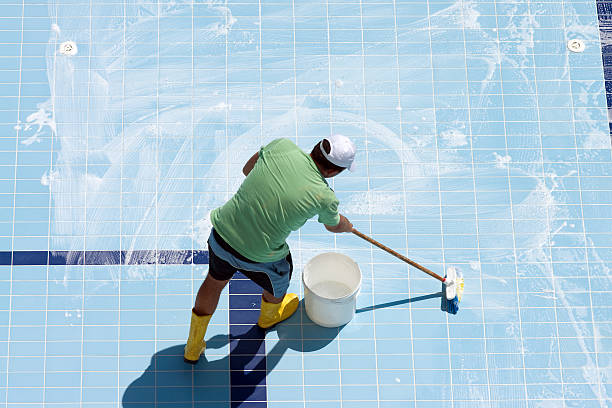
That white, crusty ring around your waterline isn't dirt, and scrubbing harder usually doesn't fix it. It's calcium buildup, and it's one of the most common reasons North Texas homeowners start searching for pool tile cleaning near me. Once it sets in, calcium scale doesn't just look bad, it gets progressively harder to remove the longer it sits.
What Causes Calcium Buildup on Pool Tile
North Texas water is naturally on the harder side, meaning it carries more dissolved minerals, primarily calcium. Every time your pool water evaporates, especially fast during our hot summers, it leaves mineral deposits behind at the waterline. Over time, those deposits harden into scale that clings to tile grout and surface texture.
A few things speed this process up:
- Water that runs high in calcium hardness or pH for extended periods
- Low water levels that expose more tile to repeated evaporation cycles
- Splashing and wave action that constantly deposits new mineral film at the same line
- Skipping regular chemical balancing, which lets calcium levels drift upward unchecked
This is why pool tile cleaning and pool chemical balancing tend to go hand in hand. Clean tile that isn't backed by balanced water just scales again within months.
Why DIY Tile Scrubbing Often Makes It Worse
It's tempting to grab a pumice stone or a wire brush and go at it yourself. The problem is that aggressive scrubbing can scratch tile glazing, and once tile is scratched, it actually attracts and holds calcium faster than smooth tile does. Acidic store-bought cleaners can also damage grout lines or discolor certain tile finishes if used incorrectly.
Professional pool tile cleaning uses methods calibrated to your specific tile type; whether that's ceramic, glass, or stone, so calcium and mineral deposits come off completely without damaging the surface underneath. That's the difference between a quick fix that comes back in a month and a clean that actually lasts.
How Often Should Pool Tile Be Professionally Cleaned?
Most pools benefit from professional tile cleaning every one to three years, depending on water chemistry and how much calcium is naturally present in your water source. Pools with consistently balanced chemistry tend to need it less often. Pools where pH or calcium hardness drift high will need attention more frequently.
Signs your pool tile needs cleaning:
- A visible white or gray ring at the waterline that doesn't come off with normal brushing
- Rough or gritty texture along the tile line
- Tile that looks dull even right after cleaning
- Buildup that's spread beyond just the waterline into steps or benches
What to Expect From Professional Pool Tile Cleaning
A proper pool tile cleaning service targets the mineral deposits directly without harming the tile glaze, grout, or surrounding pool surface. The goal isn't just to make it look better for a week, it's to restore the tile and set your water chemistry up so scale doesn't come right back.
For homeowners in Westlake, Southlake, Argyle, Northlake, and Flower Mound, pool tile cleaning is one of those services that gets overlooked until it's a visible problem, but it's also one of the easiest to prevent with regular water testing and periodic care.
Protecting Your Investment
Your pool tile is one of the more expensive-to-replace surfaces around your pool. Letting calcium buildup sit for years doesn't just look bad, it can permanently etch into porous tile and grout, turning a cleaning job into a full re-tile job. Getting ahead of it with professional pool tile cleaning protects both the appearance of your pool and the money you've already put into it.
If your waterline is looking chalky, crusty, or just not as clean as it should be, that's the signal to get it addressed before it becomes permanent.

See your tile the way it looked on day one. Request your free consultation and let Pool Theory handle the calcium buildup the right way.