
What Cyanuric Acid Does for Your Pool (And Why Too Much Is a Problem)
Cyanuric acid, often referred to as stabilizer or conditioner, plays a specific and important role in outdoor pool chemistry, particularly in a climate like North Texas where sun exposure is intense and consistent through much of the year. Understanding what it does, and what happens when levels get too high, helps explain a chemistry issue that's often misunderstood.
What Cyanuric Acid Actually Does
Chlorine breaks down relatively quickly when exposed to direct sunlight, specifically UV rays. Cyanuric acid works by binding loosely with chlorine, effectively shielding it from UV degradation and significantly slowing how fast it burns off in sunlight. Without adequate stabilizer, outdoor pools in sunny climates can lose chlorine at a dramatically faster rate, sometimes within just a few hours of direct sun exposure.
Why This Matters So Much for North Texas Pools
Given how much direct, intense sun North Texas pools receive for much of the year, cyanuric acid isn't optional, it's a practical necessity for keeping chlorine levels stable enough to actually do their job. Pools without adequate stabilizer often struggle with chlorine that seems to disappear faster than expected, requiring constant re-dosing just to maintain a stable level.
Why Too Much Cyanuric Acid Becomes Its Own Problem
While stabilizer protects chlorine, too much of it can have the opposite effect on chlorine's actual sanitizing ability. High cyanuric acid levels can reduce chlorine's effectiveness at killing bacteria and algae, a phenomenon sometimes referred to as chlorine lock, where the water can test as having adequate chlorine on a basic strip while that chlorine isn't functioning at full sanitizing strength due to being bound too tightly by excess stabilizer.
How Cyanuric Acid Levels Build Up Over Time
Unlike chlorine, which breaks down relatively quickly, cyanuric acid tends to accumulate in pool water over time, since it doesn't degrade the way chlorine does. Repeated use of stabilized chlorine products (many common chlorine products already contain cyanuric acid) without any dilution or water replacement can gradually push stabilizer levels higher and higher over a season or across multiple seasons.
The Ideal Range and Why Balance Matters
Cyanuric acid is generally recommended to stay within a range of roughly 30 to 50 parts per million for most residential pools, enough to meaningfully protect chlorine from UV breakdown without pushing high enough to interfere with its sanitizing effectiveness. Levels significantly above this range often call for partial water replacement, since cyanuric acid can't be chemically reduced the way most other pool chemistry factors can.
Why This Gets Overlooked in Routine Testing
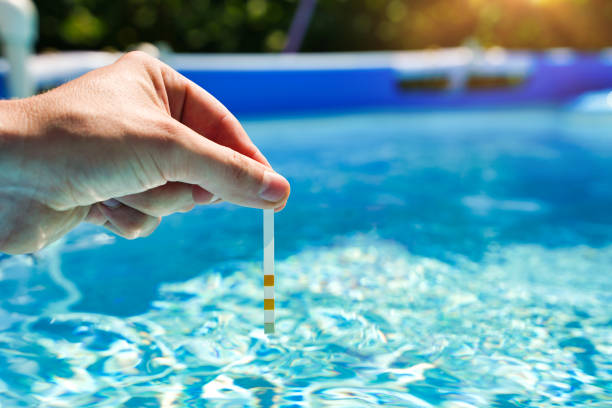
Basic at-home test strips don't always test cyanuric acid as a matter of course, meaning it can gradually climb without anyone noticing until chlorine seems to be "not working" despite testing at seemingly adequate levels on a basic strip. This disconnect, chlorine level looking fine while sanitizing effectiveness is actually compromised, is a common source of confusion for homeowners managing their own pool chemistry.
Why Professional Testing Catches This
Comprehensive pool chemical balancing includes testing cyanuric acid specifically, not just the more commonly checked chlorine and pH, which is part of why professionally managed pools are less likely to run into this particular, often misunderstood chemistry issue.

Wondering if your stabilizer levels are actually where they should be? Request your free consultation and get a complete chemistry check.