
When Equipment Failure Is the Real Reason Your Pool Turned Green
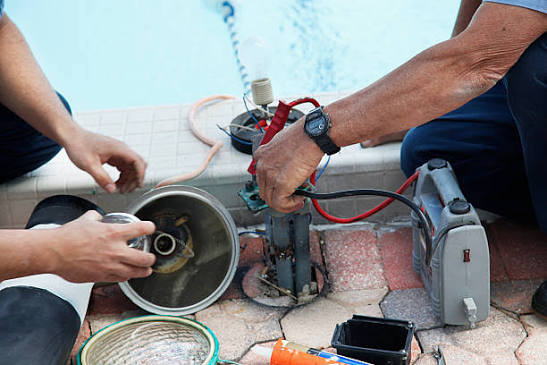
Most green pool conversations focus on missed testing, skipped weeks, or heavy rain diluting chemistry. But sometimes a pool turns green even when the homeowner has been reasonably attentive, and in those cases, the real culprit is often equipment failure that quietly undermined circulation or chemical delivery long before anyone noticed the water turning color.
How Equipment Failure Leads to Algae Growth
A failing pump reduces circulation. Even a pump that's technically still running, but underperforming, can fail to move water through the system adequately. Poor circulation creates areas of relatively stagnant water where chlorine doesn't distribute evenly, and those low-circulation zones are exactly where algae tends to establish first, sometimes while the rest of the pool still tests reasonably well.
A clogged filter limits effective sanitizing. If a filter is significantly overdue for cleaning and restricting flow, the reduced circulation has the same effect as a struggling pump, uneven chlorine distribution that leaves certain areas vulnerable even if overall chemical readings look acceptable.
A malfunctioning salt cell reduces chlorine generation. For saltwater pools, a salt cell that's scaled over or failing doesn't generate chlorine at the rate the system is designed for, meaning the pool can gradually run low on sanitizer even though the automated system is technically still operating.
A stuck or malfunctioning valve restricts flow to specific areas. If a valve isn't directing water properly, certain sections of a pool, a specific corner, a water feature, an attached spa, can end up with minimal circulation while the rest of the system seems to function normally.
Why This Type of Green Pool Is Easy to Miss the Cause Of
When algae shows up despite seemingly consistent testing and chemical maintenance, it's natural to assume something was missed on the chemistry side. But if equipment is the actual root cause, continuing to add more chemicals without addressing the underlying circulation issue means the algae is likely to return, since the conditions that allowed it to establish in the first place haven't actually changed.
Why Green-to-Blue Recovery Alone Isn't Enough in These Cases
If equipment failure caused the algae bloom, a standard green-to-blue cleaning will successfully clear the current bloom, but without identifying and repairing the underlying equipment issue, the same conditions remain in place for another bloom to develop again fairly quickly. This is why a thorough recovery process should include checking equipment performance as part of understanding why the pool turned green in the first place, not just treating the visible symptom.
How to Tell If Equipment Might Be the Cause
If algae developed despite reasonably consistent testing and chemical maintenance, or if algae seems to concentrate in a specific area rather than throughout the whole pool evenly, that pattern is worth investigating from an equipment and circulation standpoint, not just a chemistry standpoint.
What a Proper Recovery Process Should Include in These Situations
Beyond the standard shock, brush, and filter steps, addressing an equipment-caused green pool means diagnosing and repairing whatever caused the circulation or chlorine generation issue in the first place, whether that's a pump, filter, valve, or salt cell problem, so the fix actually holds long-term rather than just addressing the current bloom.

Pool keeps turning green despite regular care? Request your free consultation and get the real cause identified.