
Why Water Level Matters More Than You'd Think for Tile Cleaning
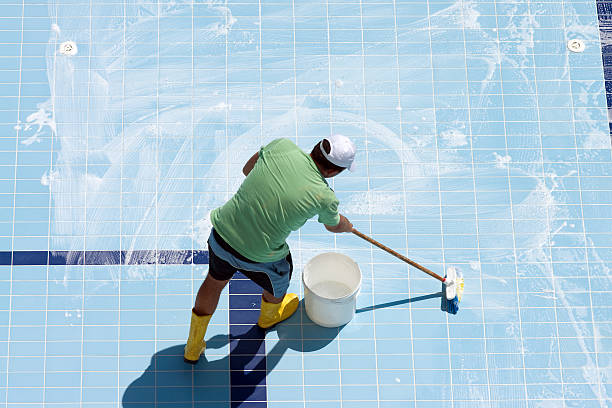
Water level isn't something most homeowners connect to tile cleaning quality, but it actually plays a meaningful, practical role in how thoroughly a technician can access and clean the full waterline tile area during a service visit.
Why Water Level Affects Cleaning Access
Pool tile cleaning generally focuses on the waterline, the specific band of tile that sits right at or near the water's surface, since this is where calcium buildup concentrates most heavily due to repeated evaporation cycles. If water level is unusually low or high relative to normal, the actual buildup band may not align with where a technician expects to focus attention, and cleaning above or below the current waterline without adjustment can mean missing the area that actually needs the most attention.
What Happens With Consistently Low Water Levels
If a pool has been running with lower-than-normal water levels for an extended period, whether from evaporation that hasn't been topped off, a leak, or intentional water conservation, the calcium buildup band may extend further down the tile than expected, since more tile surface has been repeatedly exposed to the waterline evaporation process over time.
What Happens With Water That's Been Recently Topped Off or Refilled
Conversely, a pool that's just had a significant top-off or refill may have its current waterline sitting at a different position than where buildup has historically concentrated, meaning the most visible current buildup might actually sit slightly above the current water surface, an area that's easy to underestimate in scope if water level isn't factored into the assessment.
Why Professional Assessment Accounts for This
A thorough pool tile cleaning service assesses not just the currently visible waterline, but the broader area that's likely accumulated buildup based on how water levels have historically fluctuated, rather than assuming the current water level perfectly represents where all the relevant buildup sits.
Why This Matters for Getting a Complete, Effective Cleaning
A cleaning that only addresses the immediately visible current waterline, without accounting for historical fluctuation, risks leaving buildup untreated just above or below that exact line, meaning the pool may still show visible calcium residue shortly after a cleaning that technically addressed the "waterline" as narrowly defined by the water level at that specific moment.
What Homeowners Can Do to Help
Maintaining a consistent water level between cleanings, rather than letting it fluctuate significantly, helps keep the buildup concentrated in a predictable band, making cleaning more straightforward and thorough. If your water level has fluctuated significantly before a scheduled cleaning, mentioning that history to your technician can help ensure the full affected area gets proper attention.

Want a tile cleaning that accounts for your pool's actual buildup pattern, not just the current water line? Request your free consultation.